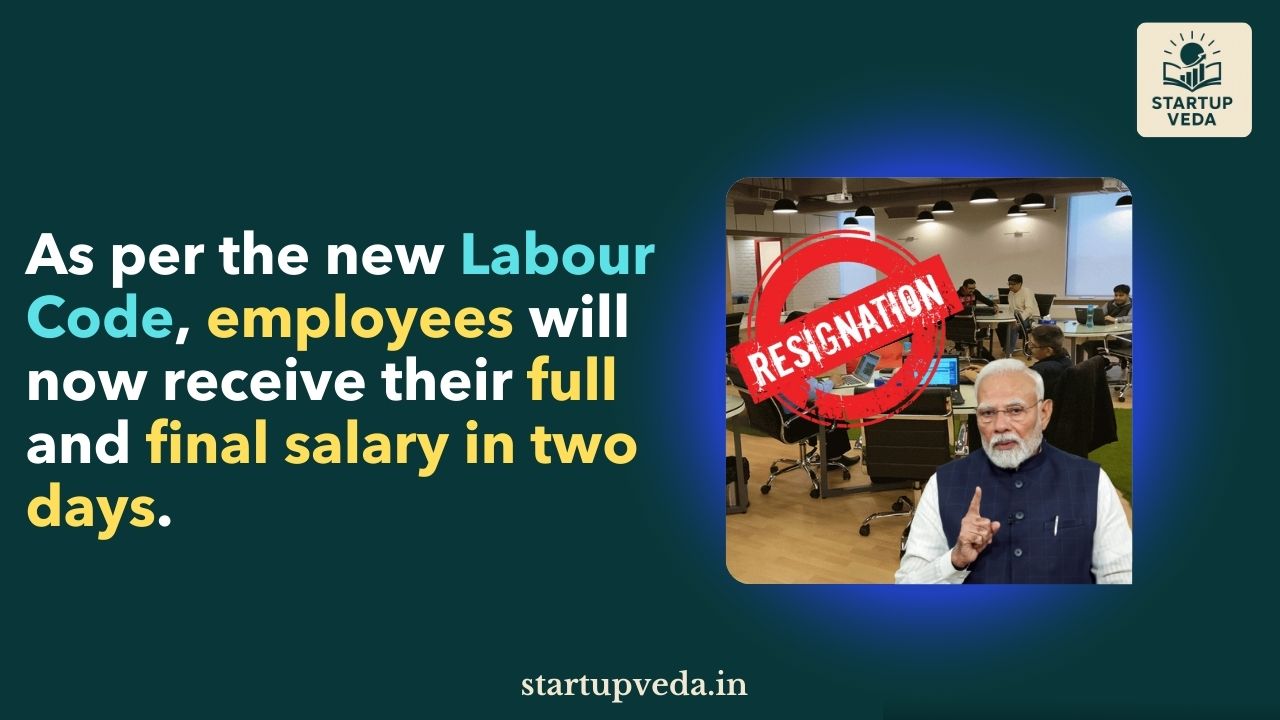
India has introduced an important change under the new Labour Law Codes that could make a real difference in workers’ lives. Earlier, when an employee resigned or was asked to leave, the process of receiving the full and final settlement often took weeks. Sometimes it took more than a month. This caused stress, uncertainty, and financial trouble for many people.
The new law now requires companies to clear all dues within two working days from the employee’s last working day. This rule brings clarity and fairness to a system that has long needed it.
What Exactly Is Changing?
Under the updated rules in the Labour Law, every employee who leaves a job must receive all pending payments within two working days. This includes unpaid salary, leave encashment, earned bonuses, and any other dues under the employment agreement.
This rule applies whether the person resigns, is terminated, or leaves for any other reason. It also applies to permanent employees, contract workers, and fixed-term employees. The earlier problem of long delays is meant to be reduced significantly under the new timeline.
Why the Law Was Updated?
The earlier labour laws had too many separate rules and often created confusion. To streamline the massive number of Labour Laws, the Government implemented four larger Labour Codes. The goal of the four Labour Codes is to make Labour Law easier to understand and fairer for both Employers and Employees.
Consideration for the dignity of Employees, especially in the transition from employment, is one of the goals of the new Labour Code. Specifically, the legislation provides for a maximum of two days to complete all steps of the process to end employment and therefore keeps Employees from being forced to wait for extended periods of time and therefore builds trust in the system.
What Employees Should Keep in Mind?
If you are planning to leave your job, it is a good idea to understand your rights clearly. Under the new rules:
- You should receive your full and final settlement (fnf) within two working days.
- You should check that all components, such as unpaid salary and leave encashment, are included.
- You should keep a record of your last working day and exit approval.
- You should follow all handover processes so that there is no confusion.
Being prepared helps ensure that the exit happens without issues on either side.
What About Gratuity and Other Benefits?
Some payments, like gratuity, follow separate rules and may not be included in the two-day timeline. Gratuity is based on years of service and has its own calculation method. The full and final settlement mainly covers the money the employee has already earned but has not received yet. Employees need to ask HR for clear guidance on what will be paid immediately and what will come later.
A Step Toward a Fairer Workplace
The two-day full and final settlement rule may seem like a small reform, but for millions of workers, it removes a major source of stress. It gives them financial stability at a time when they may already be dealing with uncertainty.
Employees are allowed to leave their company with a positive experience through an exit interview. For companies, the opportunity to increase their value as an employer through the exit interview process is significant. This change will enable India to establish a culture of clarity, respect, and timely response for all employees in the long term. It takes everyone one step closer to a more modern and humane labour system.
Read more :
- Finnable Raises ₹500 Crore to Power the Next Wave of Digital Lending
- Zepto’s CEO Admits “Dark Pattern” Mistake, A Rare Moment of Honesty in India’s Startup World
- QuickShift Raises ₹22 Crore!
- DOCO Raises ₹4.5 Crore in Pre-Seed Round Led by GVFL and Malpani Ventures
- &Done Raises ₹6.5 crore!
- Navata Supply Chain Solutions has raised ₹13.5 crore
Also, visit our social media platforms for more updates:
LinkedIn | Instagram | Twitter/X | Facebook | YouTube