Everyone calls Makhana a superfood, but it’s the supply chain that makes it super expensive.
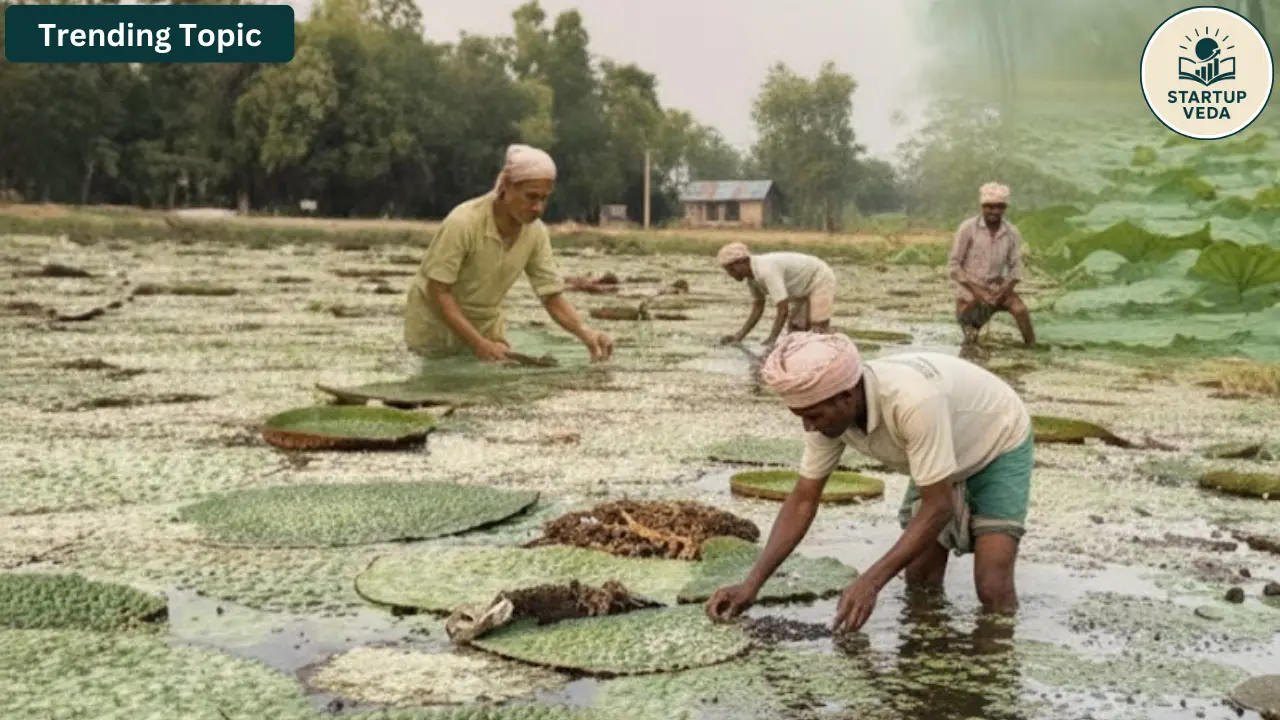
#Bihar alone produces 90% of the world’s makhana, and every single step still happens in muddy ponds, done entirely by hand.
Here’s why your small packet costs so much
𝗧𝗵𝗲 𝗛𝗮𝗿𝘃𝗲𝘀𝘁
→ Workers dive deep into ponds to collect seeds from the bottom
→ Seeds are cleaned using bamboo tools
→ Everything is sun-dried for days to get the right moisture
𝗧𝗵𝗲 𝗣𝗿𝗼𝗰𝗲𝘀𝘀𝗶𝗻𝗴
→ Seeds are sorted into 7–18 grades by size
→ Each seed is roasted individually on clay ovens
→ Only 35% of raw seeds become the final makhana you eat
A decade ago, makhana sold for ₹120/kg.
Today? ₹1,200–₹1,700/kg, a 700% jump.
Meanwhile, 100g packs sell online for ₹180, and delivery apps ship them in minutes, masking months of manual labour.
Behind every crunchy bite lies a centuries-old process no machine can replicate.
• 70% stays in India, 30% goes global, and demand keeps rising.
• The process hasn’t evolved, but the market has exploded.
This is what happens when ancient craftsmanship meets modern appetite: the price of progress is still paid by hand.